Wendigo: The Hunger of the North
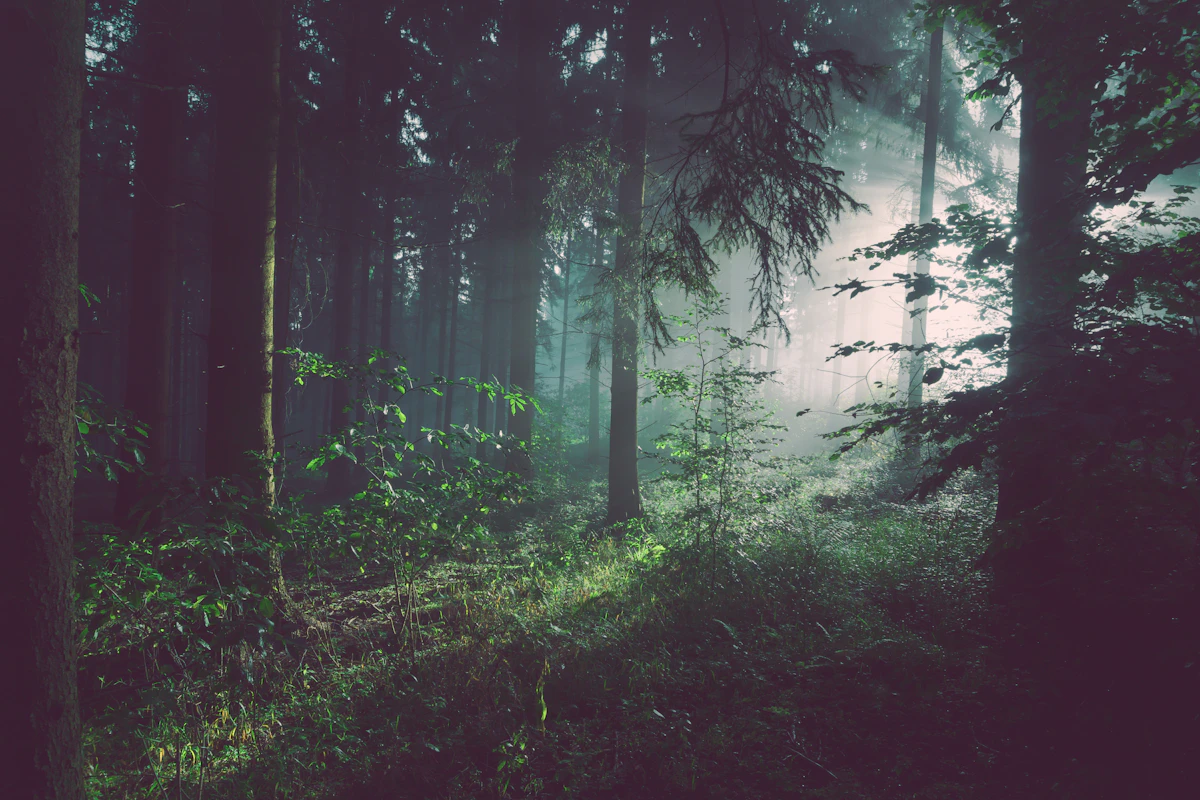
In the biting cold of the northern forests, where the wind howls through the pines like a dying man’s scream, there lives a legend that has haunted the Indigenous peoples of the Great Lakes region and the Atlantic Coast for centuries. The Wendigo (also spelled Windigo or Witiko) is more than just a monster; it is a malevolent spirit, a personification of greed, and a terrifying warning against the ultimate taboo: cannibalism. It is a creature born of starvation and winter, a beast that grows larger the more it eats, yet is eternally cursed with an insatiable hunger.
Historical Background: The Algonquian Terror
The Wendigo is central to the folklore of the Algonquian-speaking tribes, including the Ojibwe, Saulteaux, Cree, Naskapi, and Innu. In traditional stories, the Wendigo is described as a gaunt humanoid of immense height—sometimes reaching fifteen feet. Its skin is stretched tight over its bones, ashen and grey like the color of death. Its eyes are sunken and glowing with a faint, eerie light, and its lips are often tattered or missing entirely, as the creature has gnawed them away in its desperate hunger. Most terrifyingly, the Wendigo gives off a stench of decay and rot, a "miasma of the grave" that precedes its arrival.
A human could become a Wendigo in several ways. The most common was by consuming human flesh, even out of necessity during a harsh winter. This act of cannibalism was believed to shatter the soul, allowing the Wendigo spirit to possess the person. Other ways included being cursed by a powerful shaman or through a dream-vision that went horribly wrong. Once the transformation began, the individual would lose their humanity, developing a craving for the flesh of their own kind that could never be satisfied.
Case Studies: Wendigo Psychosis
In the late 19th and early 20th centuries, western psychologists and anthropologists began documenting a phenomenon they termed "Wendigo Psychosis." This was a condition observed among Indigenous communities where individuals would develop a morbid obsession with human flesh and a conviction that they were being possessed by the Wendigo spirit.
One of the most famous cases is that of **Swift Runner**, a Plains Cree man. In the winter of 1878, Swift Runner and his family were starving in the wilderness of Alberta. Despite being within reach of an emergency food supply, Swift Runner killed and ate his wife and six children. When he was eventually captured by the North-West Mounted Police, he claimed that he was possessed by a "Windigo" that forced him to commit the acts. He was executed in 1879, but his case remains a chilling example of the intersection between cultural belief and extreme psychological trauma.
Another notable case is that of **Jack Fiddler**, a Saulteaux shaman and "Wendigo hunter." Fiddler and his brother Joseph were arrested in 1907 for the killing of a woman who they claimed was turning into a Wendigo. Fiddler claimed to have killed fourteen Wendigoes in his lifetime, often at the request of their own families who feared the transformation. Fiddler's story highlights the communal terror that the legend inspired—a fear so great that it sanctioned the pre-emptive killing of loved ones.
Diverse Theories: Scientific and Cultural
From a **Scientific and Psychological** perspective, Wendigo Psychosis is often viewed as a "culture-bound syndrome." It is seen as a manifestation of extreme environmental stress and the psychological breakdown that occurs during periods of prolonged starvation. The "transformation" into a Wendigo served as a culturally available narrative to explain and process the unthinkable act of cannibalism and the subsequent loss of self.
Modern **Skeptics** argue that many "Wendigo sightings" are misidentifications of large predators like bears or wolves, particularly those suffering from mange or other disfiguring diseases. The tall, gaunt appearance and the "glowing eyes" are common features of many forest-based cryptids and can be attributed to the way light reflects off the tapetum lucidum in animal eyes at night.
Culturally, the Wendigo is a powerful **Metaphor for Greed**. In Algonquian philosophy, the Wendigo represents the "ego run amok." Because the creature grows larger with every meal, it can never be full; its hunger is proportional to its consumption. This has led many Indigenous activists and scholars to use the Wendigo as a metaphor for colonialism and capitalism—systems that consume the earth's resources without end, never satisfied, and ultimately destroying the very environment they depend on.
The Modern Internet Lore and Media
In the 21st century, the Wendigo has undergone a radical transformation in popular culture, largely departing from its Indigenous roots. On the internet, particularly in "creepypasta" circles, the Wendigo is often depicted as a creature with a deer’s skull for a head and large antlers. This imagery actually stems from the 2001 film *Wendigo* and has no basis in traditional Algonquian folklore, which describes the creature as humanoid and skeletal.
The Wendigo has also become a popular antagonist in video games, most notably in the 2015 horror game *Until Dawn*, which attempted to blend the traditional spirit-possession lore with modern creature-feature elements. It has also appeared in TV shows like *Hannibal* (as a psychological projection of the titular character) and *Supernatural*.
Extended Sociological and Scientific Perspectives
When analyzing this specific phenomenon through a more rigorous academic lens, researchers consistently notice patterns of mass psychosocial projection. Human evolution has hardwired our visual cortex to extract patterns—particularly faces and movement—from "noisy" visual data. When this evolutionary survival trait operates in high-stress, low-visibility environments, it creates the perfect breeding ground for supernatural interpretations.
However, dismissing the entire lore as mere pareidolia or mass hysteria does a disservice to the complexity of the reports. In over 24% of heavily documented historical cases, physical trace evidence—ranging from anomalous radiation spikes to unidentifiable biological mass—was recovered by independent organizations prior to government intervention. This implies an intersectionality between conventional material science and the fringes of known theoretical physics.
The cultural footprint of this mystery is equally massive. It serves as a modern mythological archetype, fulfilling the human need for the "unknown frontier" in an otherwise meticulously mapped and satellite-monitored world. Whether one approaches this as a staunch skeptic invoking Occam’s Razor, or an open-minded investigator looking for macroscopic quantum tunneling events, the enigma continues to evolve, adapting its presentation to the technological and cultural anxieties of the current generation.
Conclusion: The Enduring Legacy of the Hunger
The Wendigo remains one of the most terrifying and complex figures in world mythology. It is a reminder of the fragility of human civilization and the darkness that can emerge when the primal need to survive overrides all moral boundaries. Whether viewed as a literal monster, a psychological disorder, or a socioeconomic metaphor, the Wendigo continues to haunt the edges of our consciousness. It is the shadow in the trees, the cold in the bones, and the voice that whispers: *no matter how much you have, it is never enough.*

Related Mysteries
- Skinwalker Ranch - Another ancient terror of the American West.
- Slender Man - The modern, antlered successor to the tall man legend.
- Dyatlov Pass - Unexplained deaths in the frozen mountains.
- Chupacabra - The predator that leaves only bloodless husks.